
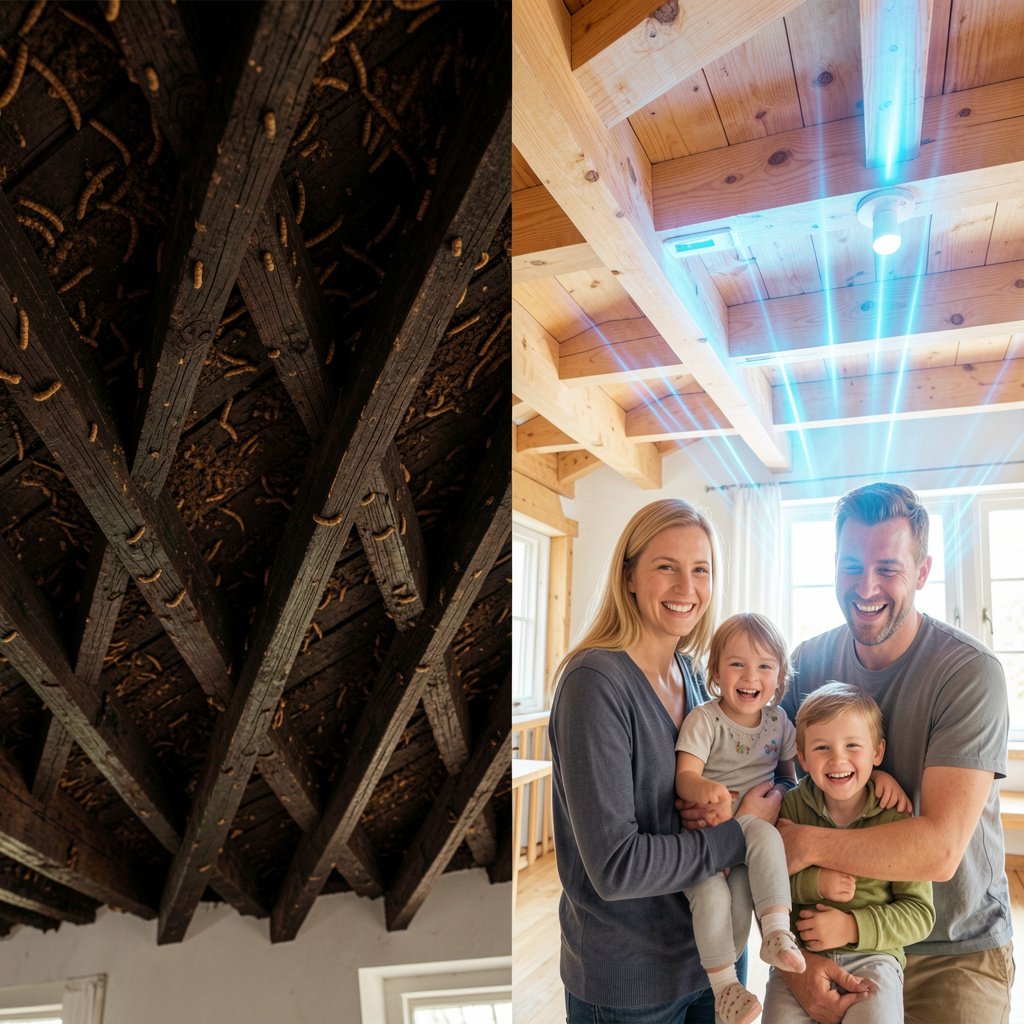
Wood-boring insects have threatened homes, historic buildings, museums, and timber structures for centuries. Traditional pest control methods often rely on chemical insecticides, fumigation, or preservatives to eliminate infestations. While these approaches can be effective in certain situations, many property owners are now seeking safer and more environmentally responsible alternatives.
One of the most innovative solutions available today uses non-ionizing microwave radiation to eliminate wood-boring insects hidden deep inside timber. Unlike ionizing radiation, which has enough energy to alter the structure of atoms or molecules, non-ionizing radiation works by generating heat. This controlled heating process allows pests to be eliminated without damaging properly treated wood or introducing harmful chemicals. Shashel has developed advanced microwave technology based on this principle, providing a modern, chemical-free approach to wood preservation.
What Is Non-Ionizing Radiation?
Radiation simply refers to the transfer of energy through space or materials. Not all radiation is the same.
There are two main categories:
Ionizing Radiation
Ionizing radiation carries enough energy to remove electrons from atoms. Examples include:
- X-rays
- Gamma rays
- Certain radioactive materials
These forms of radiation are used in medicine, research, and industrial applications, but they require strict safety controls because they can affect living tissue at the molecular level.
Non-Ionizing Radiation
Non-ionizing radiation carries much less energy and cannot ionize atoms or molecules.
Common examples include:
- Radio waves
- Wi-Fi signals
- Bluetooth
- Infrared radiation
- Visible light
- Microwave energy
Microwave woodworm treatment uses this second category—non-ionizing radiation—to generate controlled heat inside infested timber.
How Microwave Energy Works
Microwave energy interacts primarily with water molecules.
When exposed to microwaves, water molecules rapidly change orientation as the electromagnetic field alternates. This movement creates heat through molecular friction.
This is the same basic physical principle used in many industrial heating applications.
In woodworm treatment, the goal is not to heat the entire structure excessively but to apply carefully controlled energy to the affected timber.
Why Pests Heat Faster Than Wood
One of the key scientific advantages of microwave treatment lies in the different moisture content of insects and seasoned timber.
Wood-boring larvae contain significantly more water than dry structural wood.
As microwave energy passes through the timber:
- Moisture-rich insects absorb energy efficiently.
- Their internal temperature rises rapidly.
- Dry, seasoned timber absorbs less energy under controlled treatment conditions.
This difference allows professionals using Shashel technology to target active pests while preserving the surrounding wood.
What Happens to Wood-Boring Insects?
As microwave energy increases the internal temperature of the insects, critical biological functions begin to fail.
The treatment can eliminate:
- Eggs
- Larvae
- Pupae
- Adult beetles present within the treated timber
Because the insects spend nearly their entire lifecycle hidden inside the wood, reaching them directly is essential for effective control.
Microwave technology allows this without relying on pesticides or fumigants.
Why the Wood Is Preserved
A common question is whether microwave treatment damages the timber itself.
When performed with professional equipment and proper temperature control, the goal is to eliminate the insects while keeping the wood within safe operating conditions.
Modern Shashel systems carefully regulate treatment parameters to help preserve:
- Structural beams
- Roof timbers
- Wooden floors
- Antique furniture
- Decorative woodwork
- Historic building materials
The treatment targets the biological vulnerability of the insects rather than chemically altering the wood.
Advantages Over Chemical Treatments
Many property owners are moving toward microwave technology because it offers several practical benefits.
Chemical-Free
No pesticides, insecticides, or toxic fumigants are required.
No Residues
The treatment leaves no chemical deposits on wooden surfaces.
Deep Penetration
Microwave energy reaches insects hidden inside timber where surface-applied products may be less effective.
Environmentally Responsible
Reducing chemical use supports sustainable building maintenance and conservation practices.
Targeted Treatment
Localized infestations can often be treated without affecting the entire building.
These advantages have made Shashel an increasingly popular solution for residential, commercial, and heritage applications.
Applications Across Many Types of Buildings
Microwave treatment can be used in a wide range of environments.
Common applications include:
- Residential homes
- Historic churches
- Museums
- Heritage buildings
- Timber-framed houses
- Roof structures
- Commercial buildings
- Schools
- Hotels
- Antique furniture restoration
Its versatility makes it suitable wherever valuable timber requires protection from wood-boring insects.
Supporting Sustainable Wood Preservation
Environmental responsibility has become a major priority throughout Europe and many other regions.
Microwave technology supports sustainability by:
- Eliminating the need for repeated chemical applications in many localized treatments
- Reducing exposure to pesticides
- Preserving original timber instead of replacing it unnecessarily
- Supporting long-term conservation of wooden structures
For restoration professionals, this approach aligns well with modern conservation principles.
Preventing Future Infestations
Eliminating active insects is only one part of protecting timber.
Long-term preservation also involves:
- Keeping wood dry
- Repairing leaks promptly
- Improving ventilation
- Monitoring indoor humidity
- Inspecting wooden structures regularly
- Investigating fresh exit holes or frass
Routine maintenance helps reduce the likelihood of future infestations while preserving the condition of the wood.
Why Modern Technology Matters
Wood preservation has advanced significantly over the past few decades.
Instead of relying solely on chemical treatments, today’s technologies focus on:
- Precision
- Sustainability
- Scientific control
- Preservation of original materials
- Reduced environmental impact
Microwave treatment reflects these advances by combining physics, engineering, and conservation into a highly effective wood preservation method.
Through continuous innovation, Shashel continues to develop microwave systems that help protect timber while reducing dependence on traditional pesticides.
Conclusion
Non-ionizing microwave radiation offers a safe and scientifically proven way to eliminate wood-boring insects without relying on toxic chemicals. By using controlled electromagnetic energy to heat moisture-rich pests inside timber, the treatment disrupts their lifecycle while helping preserve the surrounding wood when carried out correctly.
